Research Publications
Research Publications
Explore our scholarly contributions across international conferences, peer-reviewed journals, and book chapters.
Our faculty and researchers have published over 2,000 Scopus-indexed research papers spanning across cutting-edge domains including AI, IoT, Cybersecurity, Renewable Energy, and more. Track our year-wise and department-wise publication trends.
+
Total Publications
Quality Publications
Journal Papers
Conference Papers
Recent Year-wise Quality Publications
2025
404 Publications
- Journals: 205
- Conferences: 181
- Chapters: 16
2024
383 Publications
- Journals: 200
- Conferences: 160
- Chapters: 23
2023
407 Publications
- Journals: 166
- Conferences: 208
- Chapters: 31
2022
292 Publications
- Journals: 93
- Conferences: 178
- Chapters: 20
Quality Publication Statistics
Year-wise breakdown of our quality research publications across various categories
| Year | Total Quality Publications | Journal Papers | Conference Papers | Book Chapters | Books |
|---|---|---|---|---|---|
| 2025 | 404 | 205 | 181 | 16 | 2 |
| 2024 | 383 | 200 | 160 | 23 | - |
| 2023 | 407 | 166 | 208 | 31 | 2 |
| 2022 | 292 | 93 | 178 | 20 | 1 |
| 2021 | 120 | 39 | 70 | 7 | 4 |
| 2020 | 45 | 19 | 24 | 1 | 1 |
| 2019 | 53 | 11 | 39 | 3 | - |
| 2018 | 72 | 11 | 60 | - | 1 |
| 2017 | 72 | 8 | 62 | 2 | - |
| 2016 | 69 | 16 | 50 | 3 | - |
| 2015 | 70 | 4 | 65 | 1 | - |
| 2014 | 29 | 3 | 26 | - | - |
| Total | 2,016 | 775 | 1,123 | 107 | 11 |
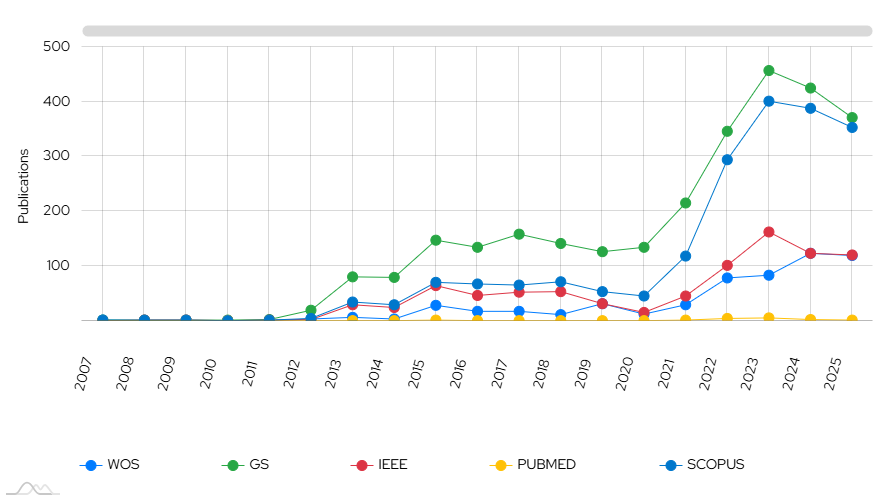
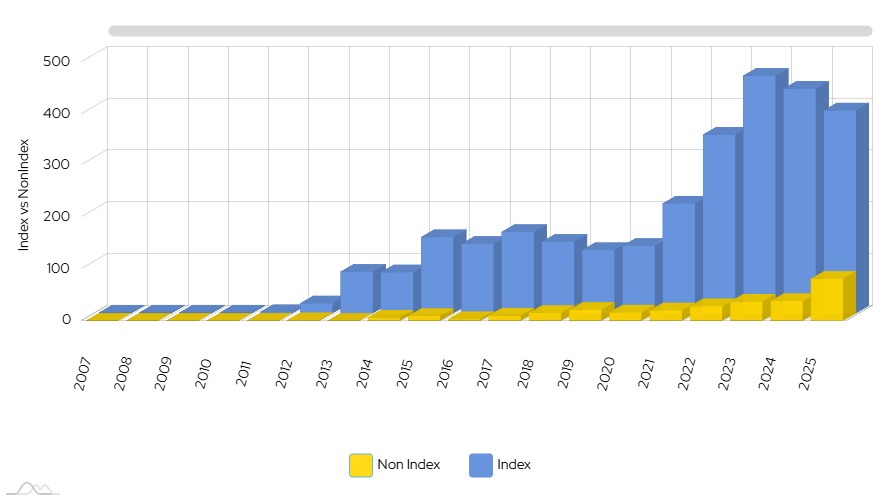
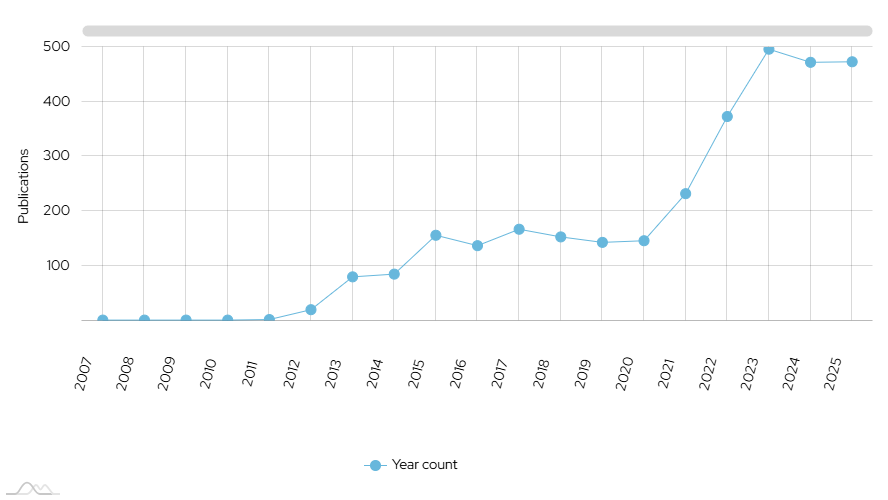
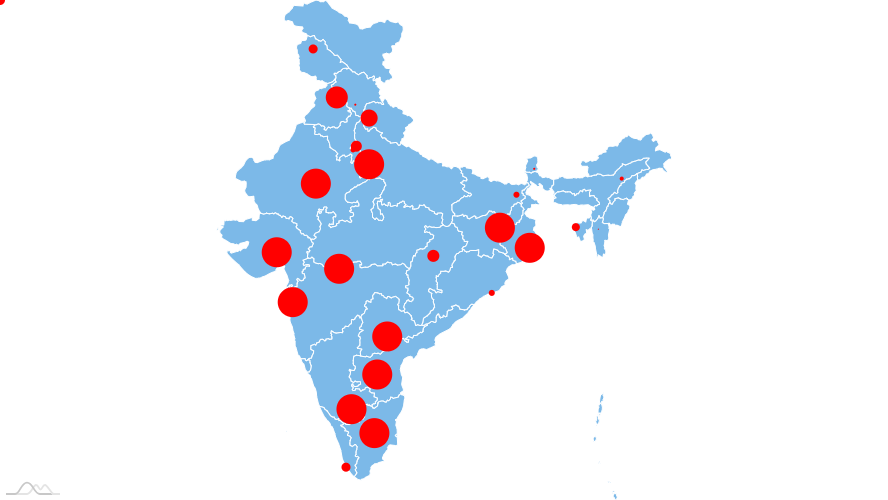
Publication Statistics Visuals
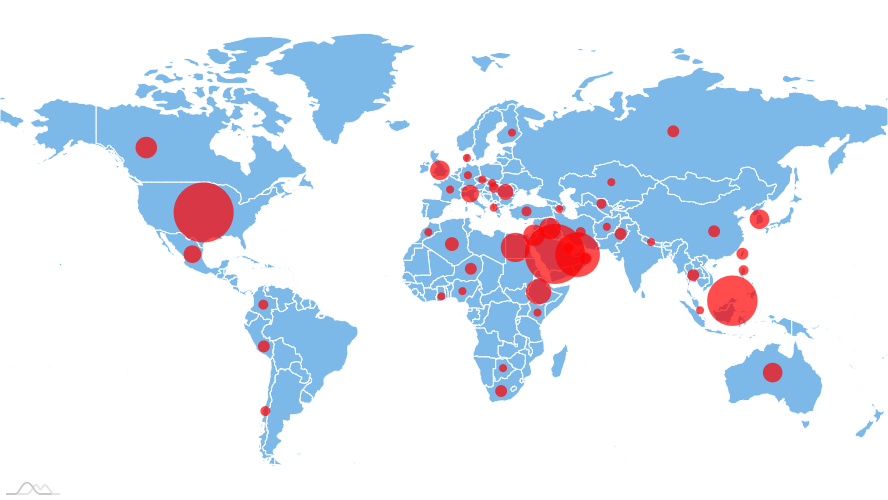
Key publication insights through year-wise, index-wise, and collaboration analytics
Find the Right Journal for Your Manuscript
Use AI-powered journal matching tools to identify the best publication venue for your research
Finding the correct journal for your manuscript is an arduous task. A number of publishers offer journal finder services powered by artificial intelligence and machine learning algorithms. These tools analyze your manuscript's title, abstract, keywords, and references to recommend suitable journals based on scope alignment, impact metrics, and publication speed.
IEEE Publication Recommender
Identify the best IEEE journal, conference, or magazine for your research. Supports electrical engineering, computer science, electronics, and related fields. Uses AI to match manuscripts with 200+ IEEE publications.
Find IEEE JournalElsevier Journal Finder
Search across 2,500+ Elsevier journals with recommendations based on your abstract. Get detailed journal metrics including CiteScore, impact factor, acceptance rate, and average review time for informed decision-making.
Find Elsevier JournalSpringer Journal Suggester
Discover the most suitable Springer or BMC journal for your manuscript. Covers multidisciplinary research areas with advanced matching algorithms. Provides open access options and article processing charge information.
Find Springer JournalTaylor & Francis Journal Suggester
Match your research with 2,700+ Taylor & Francis and Routledge journals. Strong coverage in humanities, social sciences, behavioral sciences, and interdisciplinary research areas with detailed publication metrics.
Find T&F JournalClarivate Manuscript Matcher
Free tool to match manuscripts with Web of Science indexed journals. Analyzes content similarity with recently published papers. Provides Journal Impact Factor and citation metrics for top recommendations.
Match ManuscriptWiley Journal Finder
Discover the right Wiley journal for your research across science, technology, medicine, and humanities. Filter results by subject area, open access options, and publication speed to find your perfect match.
Find Wiley JournalBest Practices for Using Journal Finder Tools
- Prepare a compelling abstract: Tools work best with well-written, keyword-rich abstracts that clearly state your research objectives and findings
- Try multiple tools: Different publishers may suggest different journals - use several tools to get comprehensive recommendations
- Verify journal metrics: Check impact factor, CiteScore, indexing status (Scopus/Web of Science), and quartile rankings before submission
- Review journal scope: Read recent articles from recommended journals to ensure alignment with your research area
- Check author guidelines: Review formatting requirements, article length limits, and submission procedures early in the process
- Consider publication speed: Some journals have faster review cycles - check average time to first decision and publication
- Assess open access options: Determine if open access is required for your funding agency and review article processing charges (APCs)
- Avoid predatory journals: Verify recommendations against legitimate journal databases (DOAJ, Scopus, Web of Science) and avoid suspicious publishers
Frequently Asked Questions
Comprehensive guide to research publication policies, procedures, and best practices
Publication Excellence
Navigate the entire research publication journey—from manuscript preparation and journal selection to ethical compliance, funding support, and citation management strategies.
1. Why Should I publish my work?
Publishing your research work serves multiple purposes: it contributes to the knowledge base in your field, establishes your credibility as a researcher, enhances career prospects, facilitates collaboration with other researchers, and helps in securing research grants and professional accreditation.
2. How to find out whether to send my paper to a journal/conference?
Consider the scope and depth of your research. Journals typically publish detailed, comprehensive research with significant findings, while conferences are suitable for sharing preliminary results, innovative ideas, or work-in-progress. Also consider the timeline—conferences have faster turnaround times compared to journals.
3. How to identify Potential Journals?
Review recent publications in your field, check where similar research is published, use journal finder tools provided by publishers (IEEE, Elsevier, Springer, etc.), consult with senior colleagues and mentors, and ensure the journal's scope matches your research topic. Always verify the journal's indexing status and impact factor.
4. Can I publish, if the idea I am working on is patentable?
It's advisable to file a patent application before publishing, as publication constitutes public disclosure and may affect your patent rights. Consult with your institution's IP cell or patent attorney before proceeding with publication of patentable work.
5. Which journals/conferences should I publish?
Target journals/conferences that are indexed in Scopus or Web of Science, have good impact factor or CiteScore, are recognized in your field, and align with your research domain. Prefer Q1/Q2 journals for maximum impact. Always verify the legitimacy of the journal/conference to avoid predatory publishers.
6. What is the impact factor?
Impact Factor is a measure of the frequency with which the average article in a journal has been cited in a particular year. It is calculated by dividing the number of current year citations to articles published in the previous two years by the total number of articles published in those two years.
7. What is Cite Score and how is Cite Score different from the Impact factor?
CiteScore is calculated by dividing the number of citations received in a given year by the number of documents published in the previous three years. The main difference is that CiteScore considers a 3-year publication window (vs 2 years for Impact Factor) and includes more document types in its calculation.
8. What are open-access journals?
Open-access journals make research papers freely available to everyone immediately upon publication. While this increases visibility and citations, authors typically pay Article Processing Charges (APC). Ensure the open-access journal is legitimate and not predatory.
9. Do I have to pay fees for publishing in a journal?
It depends on the journal. Open-access journals charge Article Processing Charges (APC). Many traditional subscription-based journals do not charge authors. Some journals offer fee waivers for authors from developing countries or provide institutional discounts.
10. What happens after a paper is submitted to a journal?
The paper undergoes initial screening by the editor, followed by peer review by 2-3 experts in the field. Based on reviewer comments, the paper may be accepted, rejected, or require revisions (major or minor). Authors address reviewer comments and resubmit. This cycle may repeat until acceptance or rejection.
11. Can I submit the same manuscript to multiple journals simultaneously?
No, simultaneous submission is unethical and violates publication standards. Submit to one journal at a time and wait for a decision (acceptance, rejection, or revision request). If rejected, you may submit to another journal after revising based on reviewer feedback. However, submitting to a preprint server (arXiv, bioRxiv, SSRN) while under journal review is generally acceptable - verify the target journal's preprint policy. Duplicate publication of the same research findings in multiple journals constitutes serious misconduct and can lead to retraction and blacklisting.
12. What is the policy on open access and predatory journals?
Open access publication is encouraged for wider dissemination and higher citation rates. Choose legitimate open access journals listed in DOAJ (Directory of Open Access Journals), Scopus, or Web of Science. Warning signs of predatory journals: (1) Aggressive email solicitation, (2) Promises of rapid publication (few days/weeks), (3) Poor website quality with grammatical errors, (4) Lack of clear peer-review process, (5) Editorial board with questionable credentials, (6) Misleading impact factor claims, (7) No clear retraction or correction policies. Consult Think.Check.Submit guidelines and verify against Cabell's Predatory Reports before submitting to unfamiliar open access journals.
13. Are preprints allowed before formal journal publication?
Yes, posting preprints is encouraged for rapid dissemination and establishing priority of discovery. Use recognized preprint servers: arXiv (physics, math, CS), bioRxiv (biology), medRxiv (medicine), ChemRxiv (chemistry), SSRN (social sciences), or OSF Preprints (multidisciplinary). Preprints receive DOIs and can be cited. Always check the target journal's preprint policy - most major publishers (Nature, Science, Elsevier, Springer) accept preprints, but some medical journals may have restrictions. Update preprint with publication details once formally published.
14. What is the typical publication timeline and review process?
Typical timeline: (1) Initial editorial screening: 1-2 weeks, (2) Peer review: 4-12 weeks (varies by journal), (3) Revision submission: 2-4 weeks deadline, (4) Final decision: 2-4 weeks, (5) Production/publication: 2-8 weeks post-acceptance. Total time from submission to publication: 3-9 months average. Track submission status through journal portal. If no response after stated review period + 2 weeks, send polite inquiry to editor. Expedited review is available in some journals for time-sensitive research. Conference proceedings typically have shorter review cycles (6-8 weeks) but strict deadlines.
15. How should I respond to reviewer comments and revision requests?
Prepare a systematic response: (1) Create a point-by-point response document addressing each reviewer comment separately, (2) Be respectful and professional, even if comments seem harsh or unfair, (3) Accept valid criticism and make recommended changes, (4) If disagreeing with a suggestion, provide scientific justification with references, (5) Highlight all changes in the revised manuscript (use track changes or color coding), (6) Include line numbers in revised submission for easy reference, (7) Submit within the deadline (request extension if needed), (8) Thank reviewers for their time and insights. Revision requests are opportunities to strengthen your work - approach them positively.
16. How are conference publications evaluated and recognized?
Conference papers are recognized if published in Scopus-indexed or Web of Science-indexed proceedings. Priority given to: (1) IEEE, ACM, Springer LNCS/CCIS series conferences, (2) International conferences with rigorous peer-review (acceptance rate <30%), (3) Conferences with CORE rankings (A*, A, B), (4) Papers presented at conferences (not just accepted but not presented). Full papers receive higher recognition than short papers/posters. Conference attendance support includes registration fees and partial/full travel grants based on conference reputation and faculty career stage. Submit conference acceptance letter and proceedings indexing proof for claims.
17. Are book chapters eligible for publication incentives?
Yes, book chapters in edited volumes from reputed international publishers are recognized: Springer, Elsevier, Taylor & Francis, Wiley, Cambridge University Press, Oxford University Press, CRC Press, IGI Global. Requirements: (1) ISBN-13 number, (2) Peer-review certification, (3) Chapter in Scopus-indexed book series (if available), (4) Clear institutional affiliation in chapter. Single-authored books and textbooks are separately recognized with higher incentives. Edited books must have contributions from multiple institutions. Avoid vanity presses and pay-to-publish book publishers. Submit complete book details including ISBN, publisher, DOI (if available), and chapter page numbers.
18. What research writing and publication support services are available?
The institution offers comprehensive support: (1) Workshops & Training: Research methodology, academic writing, LaTeX typesetting, reference management (Mendeley, Zotero, EndNote), statistical analysis (SPSS, R, Python), (2) Language Support: English language editing and proofreading services for non-native speakers, (3) Tools Access: Turnitin plagiarism checker, Grammarly Premium, journal databases, (4) Consultation: One-on-one guidance on manuscript preparation, journal selection, (5) Seminars: Monthly research colloquiums for presenting work-in-progress and receiving feedback, (6) Library Support: Access to reference materials, interlibrary loan, citation tutorials. Contact R&D cell to access these resources.
19. How do I report publications and maintain my research profile?
Mandatory reporting: Update all publications in the institutional research repository within 30 days of publication. Submit: (1) Complete publication details (DOI, volume, issue, pages), (2) PDF copy (check publisher's self-archiving policy), (3) Indexing proof, (4) Impact metrics. Maintain profiles on: Google Scholar (most visible), ORCID (unique identifier), Scopus Author ID, ResearcherID/Publons, institutional faculty page, ResearchGate/Academia.edu (optional). Keep profiles updated to ensure accurate citation tracking and h-index calculation. Update ORCID in all future submissions for proper attribution.
20. What is the policy on publication corrections, errata, and retractions?
Minor errors: Request correction/erratum from journal editor if you discover errors in published work (data, figures, author names, affiliations). Most journals publish corrections linked to original article. Serious errors: If findings or conclusions are significantly affected, consider retraction. Misconduct-related retractions: Papers with plagiarism, data fabrication, ethical violations, or duplicate publication will be retracted, impacting career progression. Institutional policy: Immediately inform R&D office of any concerns about published work. The institution maintains records of corrections/retractions. Multiple retractions may affect future incentive eligibility. Honest mistakes handled through corrections have minimal impact; deliberate misconduct has serious consequences including disciplinary action.